Key points
A qualified lead is someone who fits your ideal customer and has shown they need what you sell and could buy soon.
Marketing qualified leads show interest; sales qualified leads are ready for a sales conversation.
Most teams qualify on budget, authority, need and timing, plus one or two rules of their own.
Asking qualifying questions on the form sorts leads the moment they arrive, so sales calls the right people first.
On this page
- What are qualified leads?
- Lead vs qualified lead vs opportunity
- Marketing qualified leads vs sales qualified leads
- Qualified lead criteria
- 15 lead qualifying questions to ask
- How to qualify leads with a form
- What percentage of leads are qualified?
- How to get more qualified leads
- Next steps
- Frequently asked questions
Your form fills up, but many leads never reply, can't afford you or were only curious. Qualified leads are the ones worth calling, and this guide shows how to spot them and which questions to ask.
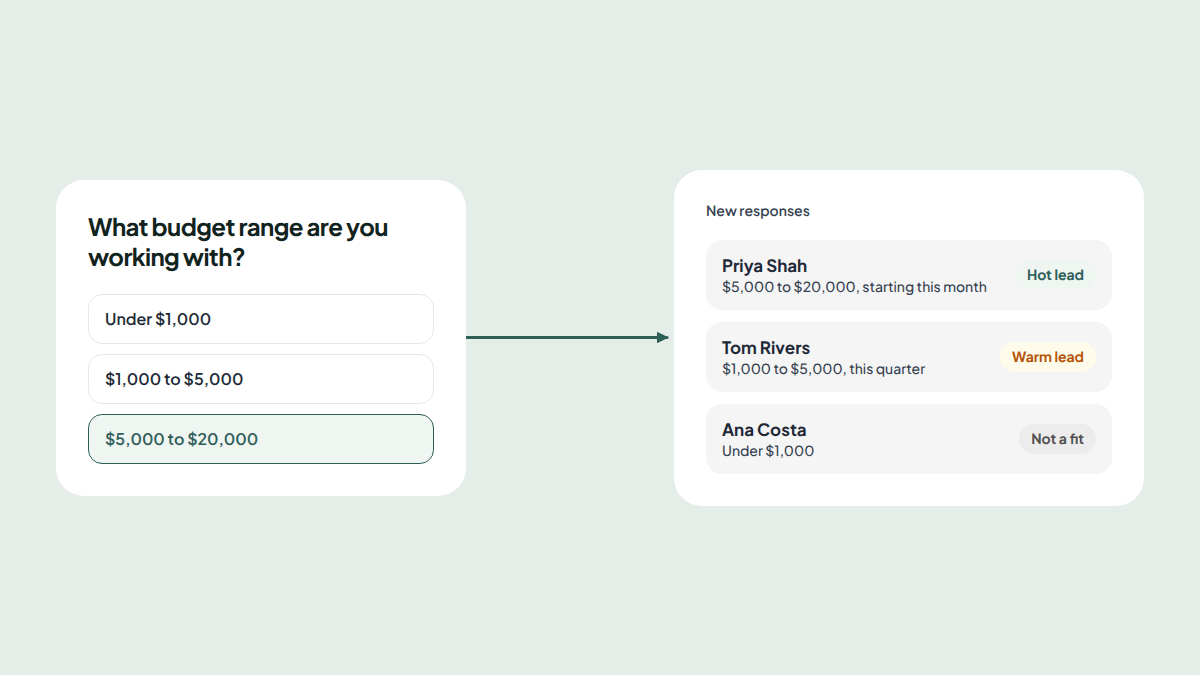
The quickest way to qualify is to ask on the form itself. The free lead generation form template asks about budget and timing and marks every lead hot, warm or not a fit, so you see who is ready before anyone picks up the phone.
What are qualified leads?
Qualified leads are potential customers who match the profile you serve and have shown a real need, the means to buy and a reasonable timeline. A qualified lead has been checked against criteria that sales and marketing agree on, so it is worth a sales conversation, unlike a lead that has only shared an email address.
Lead vs qualified lead vs opportunity
The words get mixed up, so it helps to see them side by side:
| Stage | What it means | Example |
|---|---|---|
| Lead | Shared contact details | Downloaded a price list |
| Qualified lead | Matches your criteria | Has the budget and wants to start this quarter |
| Opportunity | In an active sales process | Has a proposal and a call booked |
| Customer | Has bought | Signed the contract |
A lead that doesn't meet your criteria is an unqualified lead. That doesn't make it worthless: it may qualify later, so keep it in a nurture list rather than deleting it.
Marketing qualified leads vs sales qualified leads
Many teams split qualified leads into two stages:
- Marketing qualified lead (MQL): fits your audience and has shown interest, such as reading pricing or downloading a guide. Marketing keeps nurturing it.
- Sales qualified lead (SQL): has been checked further and is ready to talk about buying. Sales contacts it.
Software companies sometimes add a product qualified lead (PQL): someone who used a free plan or trial in a way that predicts they will pay.
A form with good qualifying questions can skip a step. When someone tells you their budget and timeline, you know straight away whether they are an MQL or an SQL.
Qualified lead criteria
The most common framework is BANT:
- Budget: can they afford it?
- Authority: can they decide, or influence who does?
- Need: do they have a problem you solve?
- Timing: do they want to act soon?
Some teams prefer CHAMP, which starts with challenges, then authority, money and prioritisation. The order changes the conversation, not the idea.
Add one or two rules of your own, such as the area you serve or the minimum project size you take on.
15 lead qualifying questions to ask
Pick two to four for a form and save the rest for the first call. Every extra question costs some completions, so ask only what changes what you do next.
Need
- What are you hoping to achieve?
- What are you using today?
- What's the biggest problem with how you do it now?
Budget
- What budget range are you working with?
- Have you set aside budget for this already?
- How do you usually pay for services like this?
Authority
- What's your role?
- Who else is involved in the decision?
- How many people are on your team?
Timing
- When are you looking to get started?
- Is there a deadline driving this?
- What happens if you don't solve this in the next three months?
Fit
- Where are you based?
- How did you hear about us?
- Have you worked with a company like ours before?
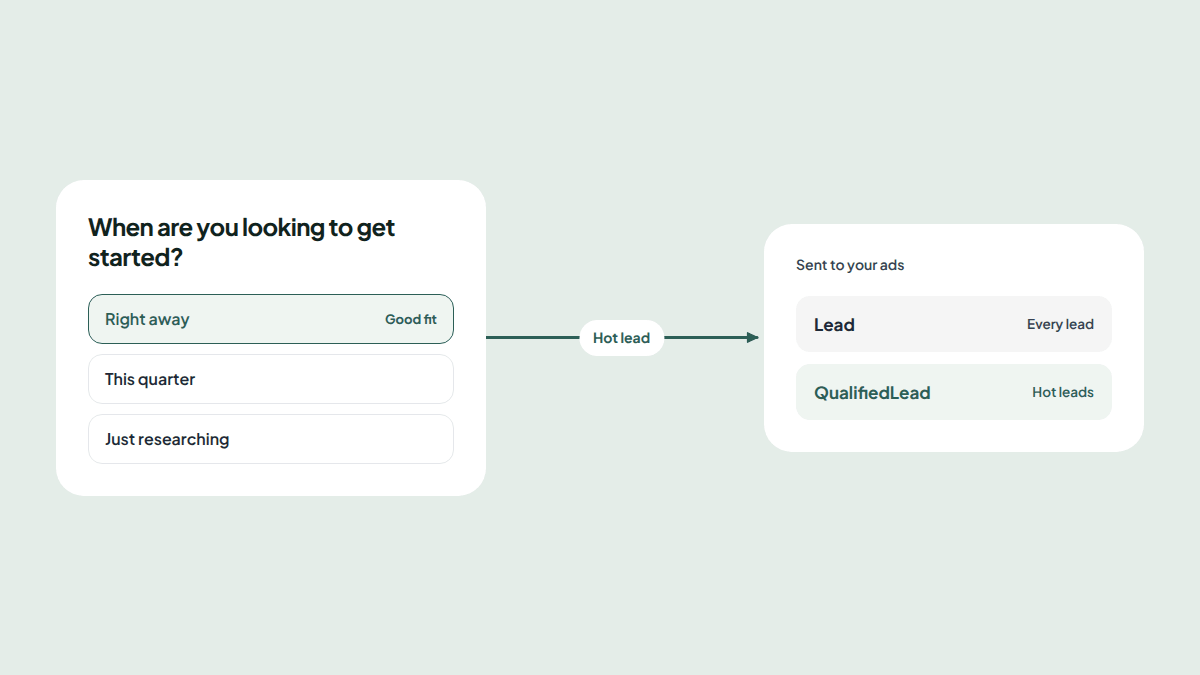
Use choices, not open text, for the questions you score. "When are you looking to get started?" with "Right away", "This month", "This quarter" and "Just researching" is fast to answer and easy to sort.
How to qualify leads with a form
Qualifying on the form means sales calls the most ready people first, and your ads learn which people to find more of. In Reuily, it takes three steps.
1. Set your own criteria
Make the form a Lead form, or start from the lead generation template, which comes with budget and timing already tagged. Then match the tags to your business:
- Tap Good fit on answers that make someone promising and Not a fit on answers that rule them out. Leave answers that are fine but not great untagged.
- Under How picky?, choose when someone counts as hot: Relaxed (half their answers good), Normal (two in three) or Picky (every answer).
- Mark a question Must-have if nobody can be hot without a good answer to it, such as budget.
2. Every lead arrives sorted
Each response arrives as a Hot lead, Warm lead or Not a fit, with the answers that decided it. One Not a fit answer rules someone out, so a great lead in an area you don't serve won't land at the top of the list.
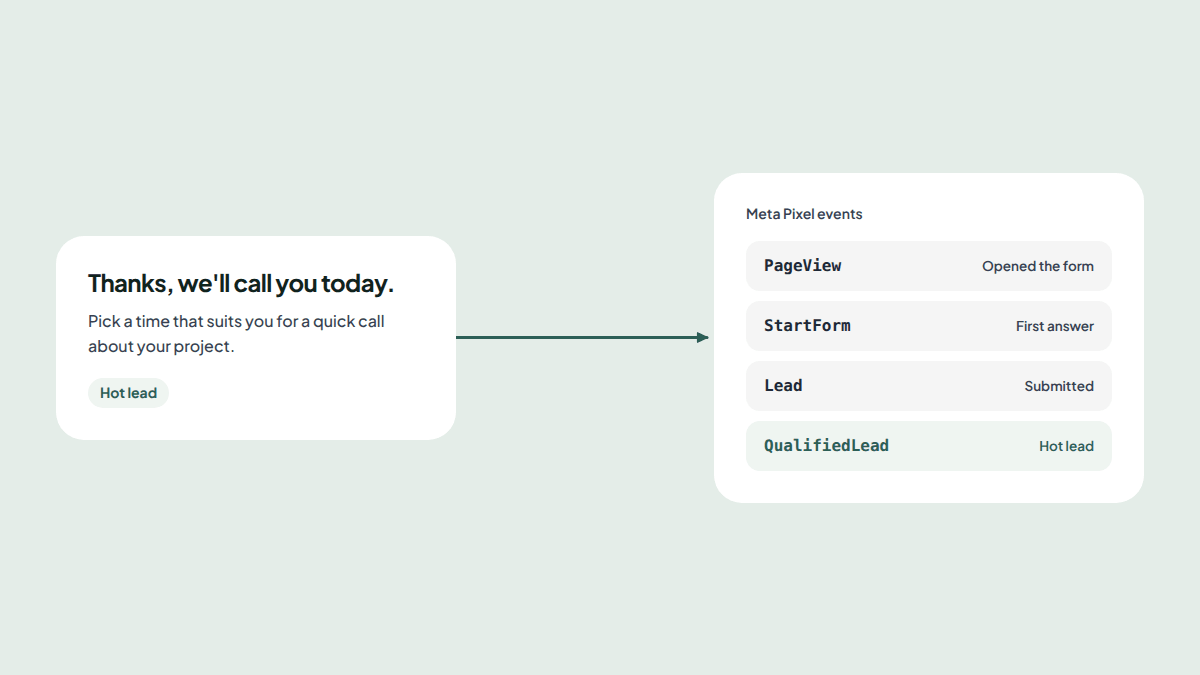
Give hot leads a Thank You page with a booking link, and send them straight to your CRM with the GoHighLevel integration or to a Slack or Discord channel.
3. Your ads learn what a qualified lead looks like
Connect Meta Pixel, Google Ads, Google Analytics 4 or TikTok Pixel on the form's Integrations page and turn on Mark hot leads as qualified. Every lead counts as a conversion, and hot leads also send a qualified one, such as QualifiedLead on Meta.
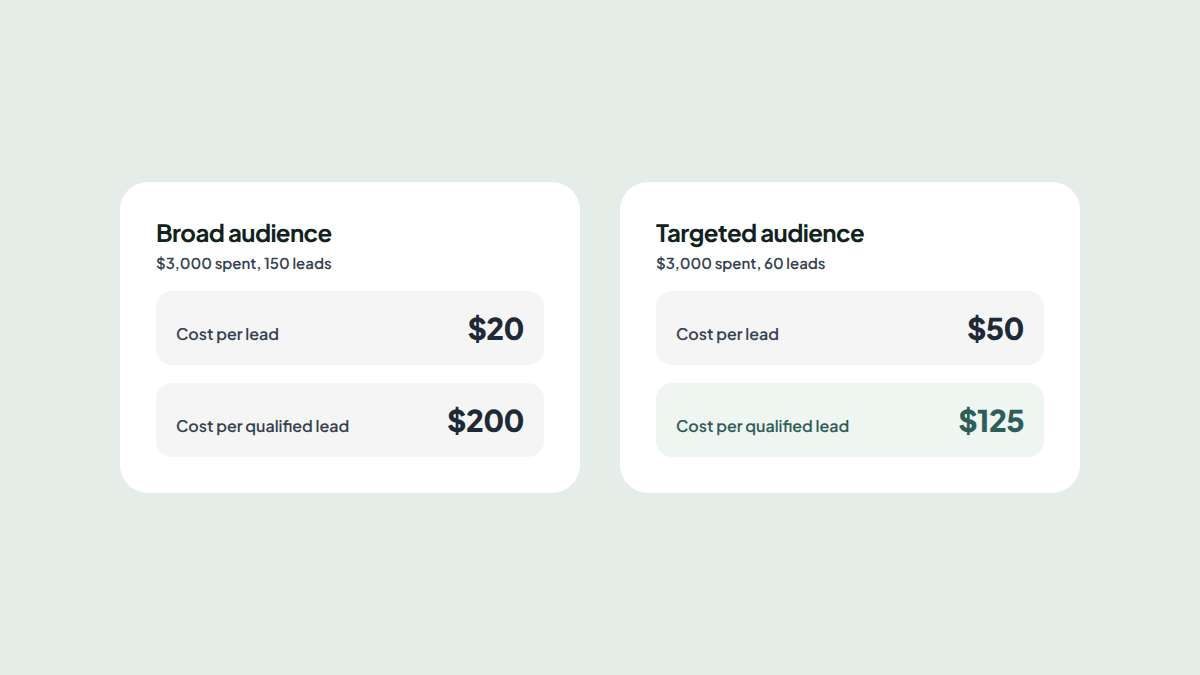
Because that event follows the criteria you set, each platform can optimise toward the leads your sales team wants, not every form fill.
What percentage of leads are qualified?
There is no reliable average, because it depends on the offer, the price and where the traffic comes from. A demo request from a search for your brand qualifies far more often than a guide download from a broad social audience.
What matters is your own trend. Track the lead to qualified rate by source every month and act on the gaps. Our guide to lead quality shows the five metrics worth tracking.
How to get more qualified leads
- Say who it's for. An ad that names the audience and the price range filters people before they click.
- Ask, don't guess. One budget or timing question sorts leads better than any amount of profiling afterwards.
- Reply fast. Harvard Business Review found companies replying within an hour were nearly seven times as likely to qualify a lead.
- Teach your ads. Send ad platforms a qualified lead event as well as the lead event, so they find more people like your best leads.
Next steps
- Use the lead generation template (opens in a new tab). It is already a Lead form, so change the tags to match your own rules.
- Selling a service with set prices? The quote request form asks for budget and timing up front.
- Real estate agents can start from the open house sign-in sheet, which already tags buyers by timeline and financing.
- Browse all form templates.
Frequently asked questions
What does qualified lead mean?
A qualified lead is a person or company that matches the customer you serve and has shown a real need and the means to buy. Calling a lead qualified means it is worth a sales conversation, unlike a lead that has only shared an email address.
What is the difference between a lead and a qualified lead?
A lead is anyone who has shared their contact details. A qualified lead is a lead you have checked against your criteria, such as budget, need and timing, and found to be a good match. Every qualified lead is a lead, but most leads are not qualified.
What is the difference between an MQL and an SQL?
A marketing qualified lead (MQL) has shown interest, for example by downloading a guide, and fits your audience. A sales qualified lead (SQL) has been checked further and is ready to talk to sales about buying. MQLs are nurtured; SQLs get a call.
What makes a lead qualified?
A lead is qualified when it meets the rules your sales and marketing teams agreed on. Common ones are a budget that fits your price, a need you solve, the authority to decide and a timeline within the next few months.
What percentage of leads are qualified?
It varies widely by industry, offer and traffic source, so there is no useful average. Measure your own rate by source each month. A rising share of qualified leads usually matters more than a rising number of leads.
How do you qualify a lead?
Decide your criteria first, then ask about them on your form or in a first call. Score each answer as a good sign, neutral or a deal-breaker, and pass leads that meet the bar to sales. Review the rules with sales every few months.
How do you get more qualified leads?
Say clearly who your offer is for in your ads and landing page, ask one or two qualifying questions on the form, and tell your ad platforms which leads qualified so they find more people like them.