Key points
Landing page conversion rate is conversions divided by visitors, as a percentage.
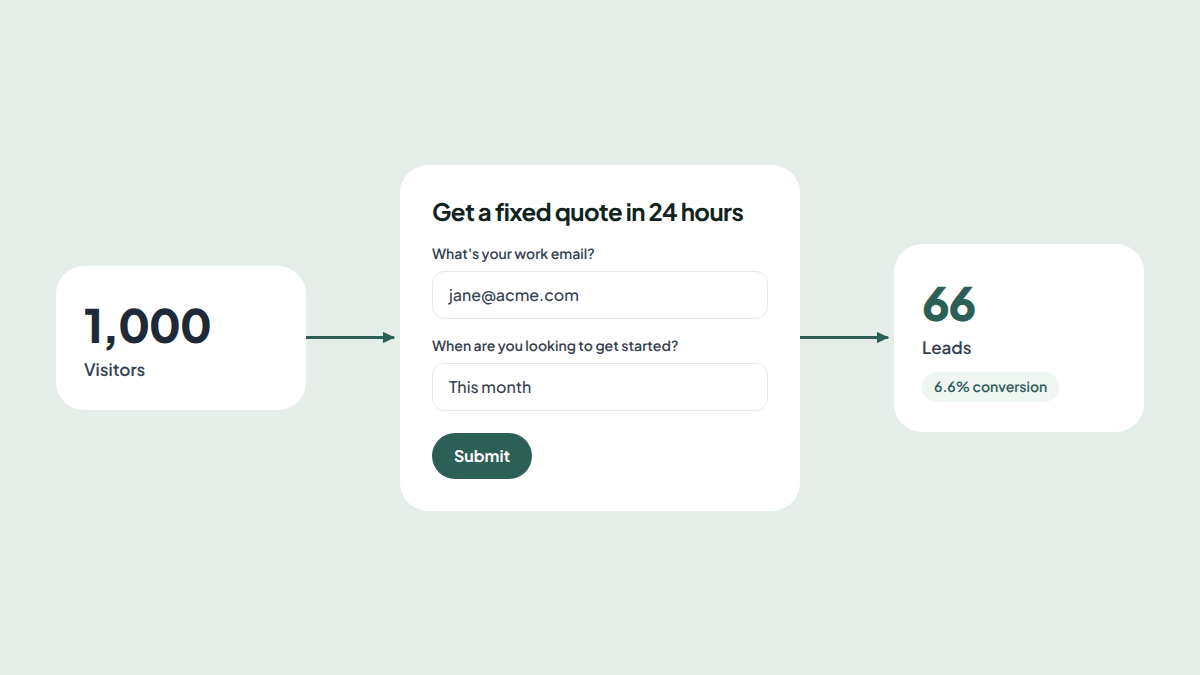
The median landing page converts 6.6% of visitors, with industry medians from 3.8% to 12.3%.
The form decides most of it. Few questions, clear labels and answers checked as people go all raise completions.
Count qualified leads, not every form fill, and send that conversion to your ads so they find more people who buy.
On this page
- What is landing page conversion rate?
- Landing page conversion rate formula
- Average landing page conversion rate
- What is a good landing page conversion rate?
- Why your landing page isn't converting
- How to increase landing page conversion rate: fix the form first
- Count the right conversion: qualified leads, not form fills
- Next steps
- Frequently asked questions
Every visitor who leaves your landing page without converting is a click you paid for. This guide covers the average landing page conversion rate, what a good rate is for your industry, and the changes that raise it most.
The biggest change is usually the form, where interested visitors become leads. The free lead generation form template is short and marks every lead hot, warm or not a fit.
What is landing page conversion rate?
Landing page conversion rate is the percentage of visitors to a landing page who complete its goal, such as submitting a form, booking a call or starting a trial. It shows how well the page turns paid or organic traffic into leads or customers, and it is the clearest way to compare one landing page with another.
Landing page conversion rate formula
Conversion rate = conversions ÷ visitors × 100
A page with 1,500 visitors and 84 form submissions converts at 5.6%. Use unique visitors, the same date range for both numbers, and one goal per page. If a page has two goals, track them separately.
Average landing page conversion rate
Unbounce's 2024 benchmark, built from more than 41,000 landing pages and 57 million conversions, is the largest public dataset:
- Median across industries: 6.6%
- Industry medians: from 3.8% to 12.3%
- Visits from phones: 83% of all visits
- Desktop vs mobile: desktop converted about 8% better
For paid traffic specifically, LocaliQ's 2026 benchmarks put the average conversion rate at 8.18% for Google search ads and 8.54% for Facebook lead campaigns.
What is a good landing page conversion rate?
Above 6.6% beats most pages, and above 10% is strong for most industries. But a benchmark is only a sanity check. The best target is your own rate, improving month by month, measured on the conversion that matters.
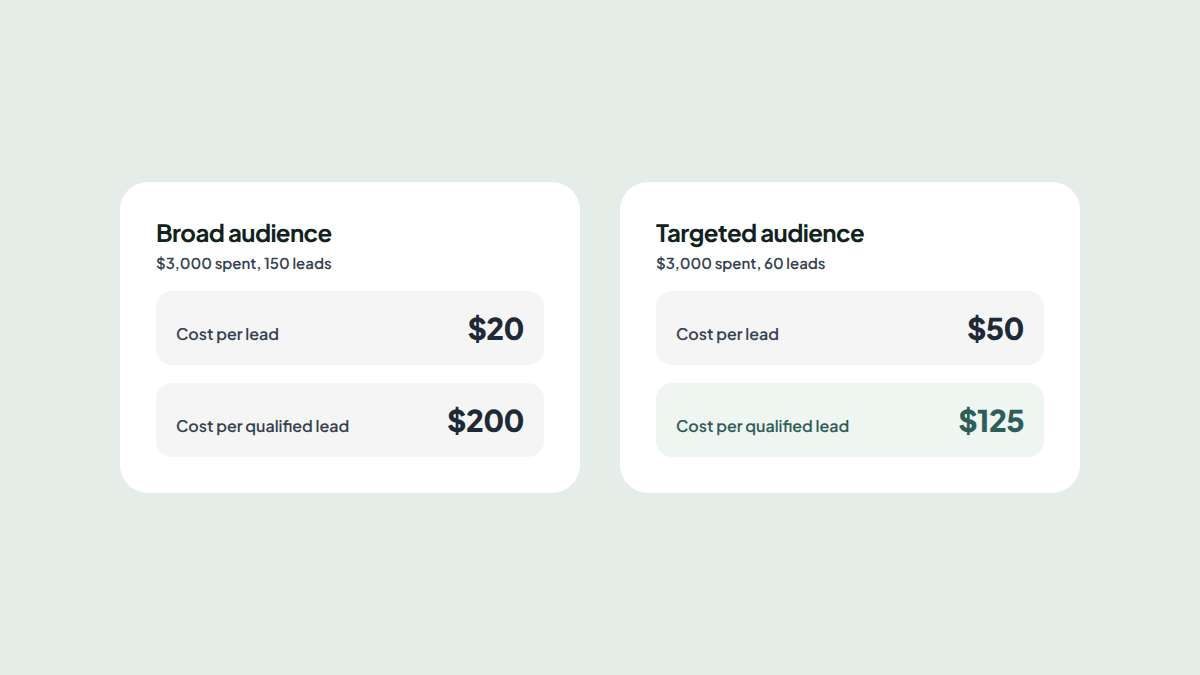
That last part is easy to miss. A page that converts at 12% but brings in the wrong people loses to one at 7% that brings in buyers.
Track qualified leads as well as form fills, and judge pages by cost per qualified lead.
Why your landing page isn't converting
Check these in order:
- The page doesn't match the ad. A visitor who clicked "same-day boiler repair" and lands on a general homepage leaves.
- The offer is vague. "Contact us" gives no reason to act. "Get a fixed quote in 24 hours" does.
- The form asks too much. Every question has to be worth the effort it asks for.
- The form is hard to complete. Unclear labels, tiny tap targets and errors that only appear after submitting all cost leads.
If many visitors start the form but few finish, the problem is the form. Zuko's form analytics data shows that about one in three people who start a form don't finish it.
How to increase landing page conversion rate: fix the form first
The form is the last step between a paid click and a lead, so it is where small changes pay most.
1. Ask only what you will use
In HubSpot's analysis of 40,000 landing pages, asking for a phone number went with conversion falling from 19% to 13%. If an answer won't change what you do next, leave the question out.
2. Write clear labels and helpful errors
A Google and University of Basel study rewrote real forms with 20 simple guidelines. First-try submissions rose from about 30% to 73%, and people finished up to a third faster.
3. Check answers as people go
In Luke Wroblewski's tests, checking each field right after people left it cut errors by 22% and completion time by 42%. Nobody should find a mistake only after pressing Submit.
4. Make it easy on a phone
83% of landing page visits in Unbounce's data came from phones. Use big tap targets, choices instead of typing where you can, and the right keyboard for email and phone fields.
5. Let browsers fill in details
Chrome found that people who use autofill abandon forms 75% less often. Label name, email and phone fields clearly, so browsers recognise them.
6. Split long forms into steps
Zuko's experience is that neither format always wins. One page suits two to five short questions; steps suit six or more, so nobody faces a wall of fields.
7. Find the question people leave on
In Reuily, Drop-off by page in a form's analytics shows how many people leave on each page. Reword, shorten or remove the question that loses the most people, then check again.
Then check the page
- Match the headline to the ad. Use the same words and the same offer.
- Have one goal. Remove links that compete with the form.
- Write simply. In Unbounce's data, pages written at a 5th to 7th grade reading level converted at 11.1%, compared with 7.1% at an 8th to 9th grade level.
Count the right conversion: qualified leads, not form fills
A higher conversion rate only helps if the extra leads are the right people. Most setups send ad platforms the same conversion for every form fill, so a student and a ready buyer look identical.
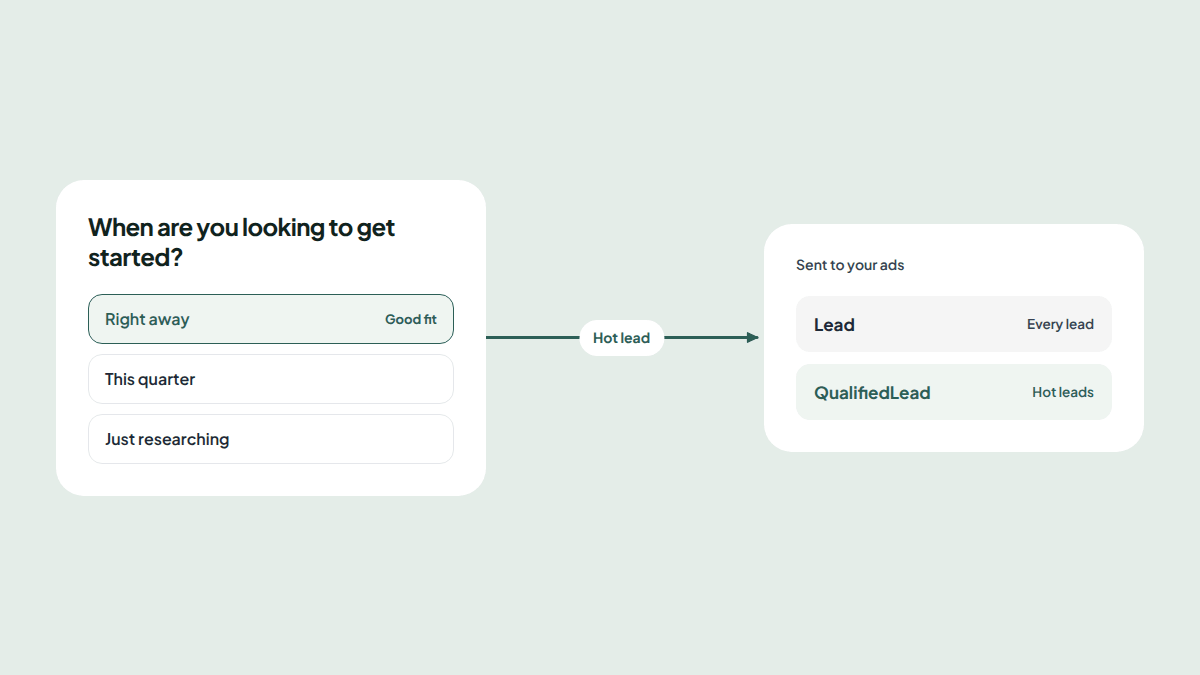
The platform then does what it is told: it finds more people who fill in forms. Tell it which leads qualified, and it can look for more people who buy. Meta's own tests found that advertisers optimising for quality leads paid 15% less per quality lead on average.
You decide what qualifies
Only you know what makes a good lead for your business. In Reuily, make the form a Lead form, or start from the lead generation template, which comes tagged. Then set the tags:
- Good fit on answers that make someone promising, such as a budget over $5,000.
- Not a fit on answers that rule someone out, such as an area you don't serve.
- Must-have on a question nobody can be hot without, such as budget.
Under How picky?, choose when someone counts as hot: half their answers good, two in three, or every one. Each submission is then scored as a Hot lead, Warm lead or Not a fit by your rules, not a guess.
Reuily sends that conversion to your ads
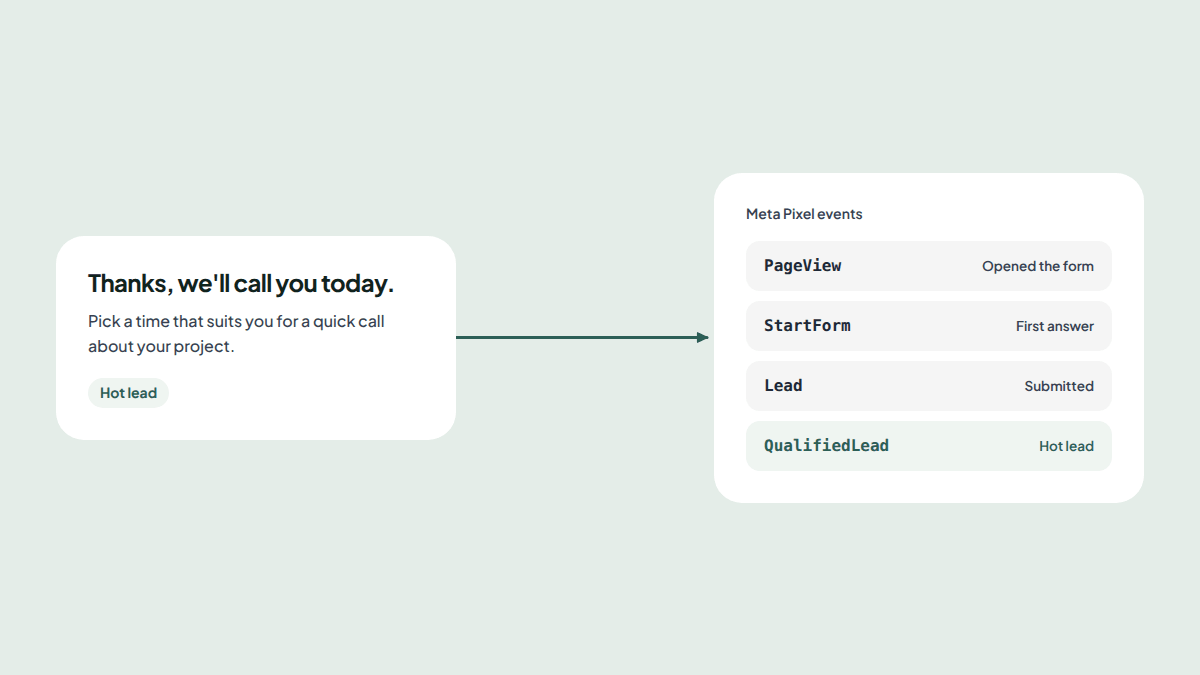
Open the form's Integrations page and connect Meta Pixel, Google Ads, Google Analytics 4 or TikTok Pixel. Every submission counts as a lead. Turn on Mark hot leads as qualified, and hot leads also send a conversion each platform can optimise for:
| Platform | Every lead | Hot leads also send |
|---|---|---|
| Meta | Lead | QualifiedLead |
| Google Ads | Lead conversion | Hot lead conversion |
| Google Analytics 4 | generate_lead | qualify_lead |
| TikTok | Lead | ApplicationApproval |
Send ad traffic straight to the form's link, on your own domain if you add one, so the conversion fires on the page where people convert. Events carry the lead level, never answers.
Start campaigns on the lead conversion, then switch to the qualified one once it fires steadily. Our guide to Meta pixel events shows how to set that up in Meta.
Next steps
- Use the lead generation template (opens in a new tab). It is already a Lead form with budget and timing tagged.
- For general enquiries, start from the contact form template.
- Read how to improve lead quality and what cost per qualified lead to aim for.
- Browse all form templates.
Frequently asked questions
What is a good landing page conversion rate?
Unbounce's study of 41,000 landing pages found a median conversion rate of 6.6%, so anything above that beats most pages. A better target is your own rate last quarter, because industry, offer and traffic source change what is possible.
How do you calculate landing page conversion rate?
Divide the number of conversions by the number of visitors to the page, then multiply by 100. A page with 2,000 visitors and 90 form submissions has a 4.5% conversion rate. Use unique visitors and the same date range for both numbers.
What is the average landing page conversion rate by industry?
In Unbounce's 2024 benchmark, industry medians ranged from 3.8% to 12.3%. Services with a clear, urgent need tend to convert higher, while expensive or complex purchases convert lower because people research for longer.
Why is my landing page not converting?
The most common reasons are a page that doesn't match the ad, an unclear offer, slow loading on phones and a form that asks too much. Check where visitors leave first. If many start the form but few finish, the form is the problem.
Do landing pages increase conversions?
Yes, when they focus on one offer. A landing page built for a single ad group, with one call to action and a short form, usually converts better than a homepage, which has many links competing for attention.
How do I track qualified leads as conversions?
Decide which answers make someone a qualified lead, score each submission against those rules, and send ad platforms a second conversion for qualified leads alongside the normal lead event. Once it fires steadily, make it the campaign's optimisation goal.
Is a 10% landing page conversion rate good?
Yes. A 10% rate is well above the 6.6% median in Unbounce's benchmark. Check that the leads are good too: a high rate from the wrong people can still lose money.